
TRUELL2026-10-30T21:08:23+00:00
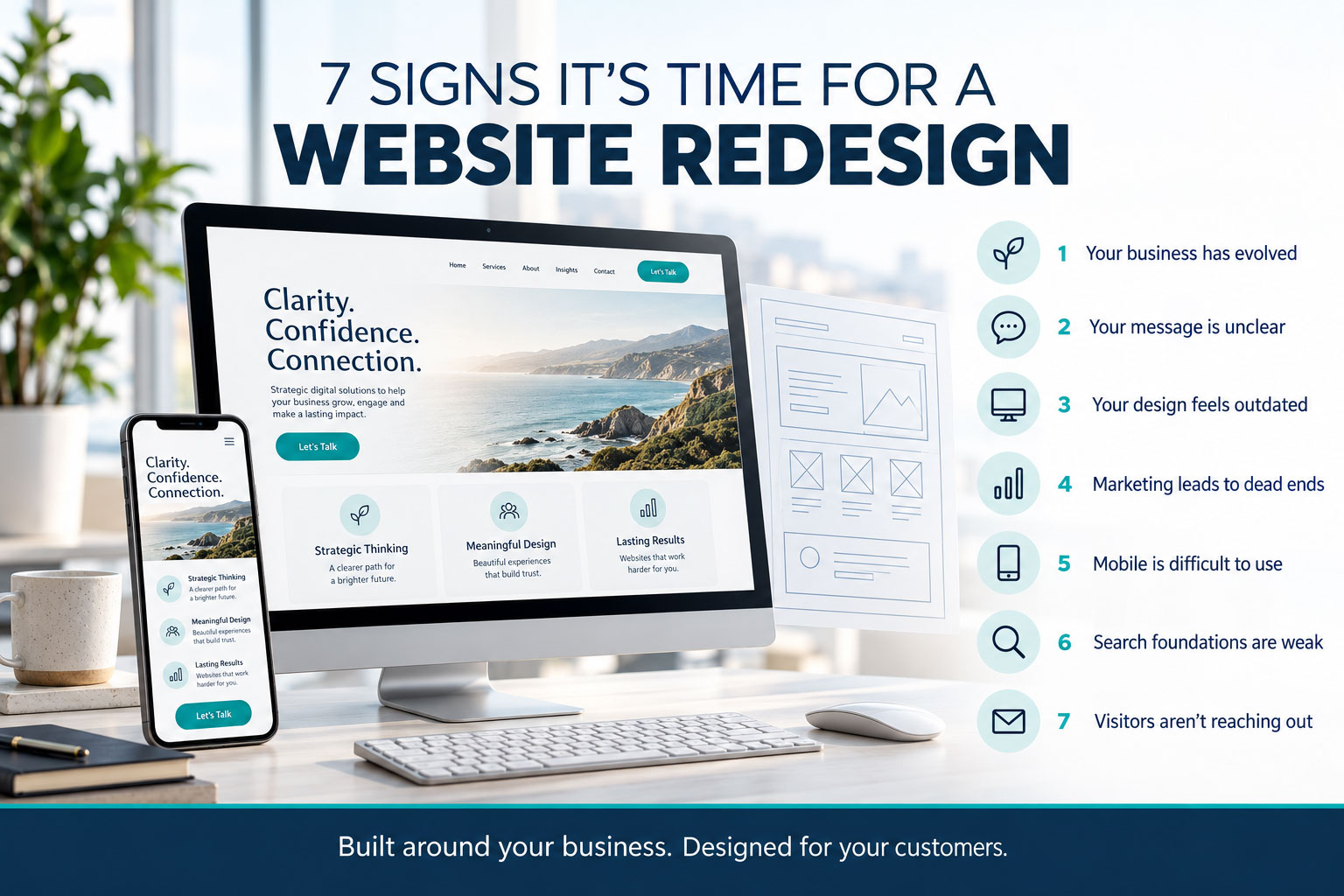
7 Signs Your Business Needs a Website Redesign
Your business may need a website redesign when its messaging no longer reflects what you do, visitors struggle to find information, the mobile experience is difficult, or the site fails to support search visibility and customer inquiries. The right next step depends on whether those problems require targeted improvements or a more complete rebuild.
Your business has evolved. Your services may have expanded, your audience may have changed, and your goals may look different than they did a few years ago.
But has your website kept pace?
For potential customers, your website is often an early opportunity to understand your business and decide whether to contact you. When that experience feels confusing, outdated, or disconnected from what you offer, it can create hesitation before a conversation begins.
At TRUELL, website strategy, design, and development start with understanding the business behind the website. Here are seven signs it may be time to take a closer look at yours.
1. Your Website No Longer Reflects Your Business
Perhaps you have added services, entered new markets, refined your positioning, or grown into a more established organization. If your website still describes the business, you were several years ago; potential customers are getting an incomplete picture.
That disconnect can show up in outdated service descriptions, missing projects, old photography, or messaging that no longer explains your value.
Ask yourself: Would someone visiting your website today understand the business you want to grow?
A redesign creates an opportunity to align your messaging, content, navigation, and visual identity with your current business and its direction.
2. Visitors Have to Work Too Hard to Understand What You Do
Visitors should quickly understand what you offer, who you serve, and how to take the next step.
If your homepage relies on vague statements, your service names are difficult to interpret, or important information is buried in several clicks deep, your website may be creating unnecessary work for prospective customers.
For example, “Solutions for What’s Next” says little without an explanation of the services behind it. Clear language helps visitors recognize whether your business can address their needs.
Effective website strategy organizes information around the questions customers bring to the site. Clear headings, useful service descriptions, and intuitive navigation help them move forward with confidence.
3. Your Website Looks Outdated or Inconsistent
An outdated website can create uncertainty about the business behind it, especially when the experience does not match the quality of your work.
The issue may be dated imagery, crowded layouts, inconsistent fonts, or pages that look as though they belong to different companies.
A website redesign should establish a cohesive visual experience that supports your brand and makes information easier to use. That includes readable typography, thoughtful spacing, relevant imagery, and consistent page layouts.
The question is whether your design helps customers see your business as clearly and credibly as they would after meeting your team.
4. Your Website Isn’t Supporting Your Marketing
Your marketing brings people to your website. What happens when they arrive?
An email promoting a specific service should lead to a page that explains that service. An advertising campaign should give visitors a clear connection between the message they clicked and the action you want them to take.
If every campaign sends people to a general homepage, visitors may have to search for the information that interested them.
A strategic website gives your marketing somewhere purposeful to lead. Service pages, helpful articles, campaign landing pages, and clear calls to action can create a more connected path from initial interest to inquiry.
It should also allow your team to publish and update content without routine changes becoming a major obstacle.
5. Your Website Is Difficult to Use on Mobile Devices
A website can look polished on a desktop and still be frustrating on a phone.
Small text, crowded menus, awkward forms, overlapping content, and hard-to-tap buttons can make simple tasks difficult. Visitors may struggle to compare services, view your work, or contact your team.
Review your website on your own phone. Can you easily find a service, read the page, and complete an inquiry form? Does the content load without making you wait through oversized images or unnecessary effects?
Responsive website design should make important information and actions easy to access across screen sizes.
6. Your Website Isn’t Built to Support Search Visibility
If your website is difficult to find through relevant searches, its content and technical foundations deserve a closer look.
Common gaps include missing service pages, unclear page titles, limited useful content, broken links, or pages that search engines cannot access properly.
A redesign provides an opportunity to plan your site around what customers need to know, with descriptive headings, focused pages, useful internal links, and sound technical structure.
Those foundations also matter as people use AI-powered search tools to research businesses and compare options. Clear explanations help both readers and automated systems interpret what your business offers.
A redesign alone does not guarantee visibility. It should establish a foundation that ongoing content, optimization, and measurement can build on.
7. Visitors Aren’t Taking the Next Step
A website may attract visitors without making it easy for them to become customers.
Your contact information may be hard to find. Calls to action may be vague. An inquiry form may ask for too much information or fail to work correctly.
Visitors may also need more confidence before reaching out. Relevant project examples, testimonials, process information, and clear service descriptions can help answer their questions.
Before assuming you need a complete redesign, review your inquiry process and available website data. Test your forms, check where visitors leave, and consider whether your traffic is reaching the right audience.
Sometimes a focused improvement can remove a major obstacle. In other cases, the problems extend across the website and call for a broader rethink.
Do You Need a Website Refresh or a Complete Redesign?
A website refresh may be enough when the underlying structure works well, and the main needs are updated copy, imagery, styling, or clearer calls to action.
A more complete redesign may make sense when your positioning has changed; navigation creates confusion, the mobile experience is poor, or technical limitations prevent the website from supporting your goals.
The decision should begin with understanding what is working, what is creating friction, and what the business needs the website to accomplish.
That assessment helps define the right scope and priorities before design and development begin.
Ready for a Website That Better Supports Your Business?
Your website should help people understand your value, trust your business, and take the next step.
TRUELL brings strategy, messaging, user experience, design, development, and search foundations together to create websites built around those goals.
Whether you need focused improvements or a complete redesign, we can help you identify the priorities and plan a clearer path forward.
Explore TRUELL’s Website Strategy, Design & Development services to learn more.
Frequently Asked Questions About Website Redesigns
How often should a business redesign its website?
There is no universal schedule. Consider a redesign when your website no longer reflects your business, creates usability problems, lacks necessary functionality, or cannot support your marketing goals. Regular reviews can help identify smaller improvements before a complete redesign becomes necessary.
What is the difference between a website refresh and a redesign?
A refresh typically updates selected elements, such as copy, photography, styling, or calls to action, while retaining much of the existing structure. A redesign involves broader changes to the website’s organization, user experience, visual design, or development.
Will a website redesign improve SEO?
It can help when the project addresses content gaps, site structure, mobile usability, performance, and technical issues. Results are not automatic. Existing URLs, valuable content, and redirects also need careful planning to protect established search visibility.
Why is my website getting traffic but few inquiries?
Possible reasons include visitors who are not a good fit, unclear messaging, limited evidence of your capabilities, hard-to-find contact options, or problems with forms. Review traffic sources, visitor behavior, and the inquiry process before deciding which changes to make.
What should I look for in a website redesign partner?
Look for a partner who asks about your business goals, audience, messaging, existing website performance, and marketing needs. Their approach should connect strategy, content, design, development, and search considerations, with a clear plan for launch and ongoing maintenance.